
Prestige Fragrance Category: What It Means and Why It Matters
TL;DR:
- The prestige fragrance category includes luxury perfumes and colognes made with high-quality ingredients and built on brand heritage. These scents are sold through selective distribution channels and feature higher fragrance concentrations, creating emotional bonds with consumers. Market trends show growth in higher concentrations, gender-fluid formats, and experiential purchasing.
The prestige fragrance category is defined as luxury perfumes and colognes that command premium prices through high-quality ingredients, brand heritage, elevated concentrations, and strong emotional resonance with consumers. This is the industry’s standard term for what shoppers often call “luxury” or “high-end” fragrances. Fragrance is the second-largest category in the U.S. prestige beauty market, holding 28% of sales and growing 12% in 2024. That growth signals a real shift in how consumers spend on personal care. Understanding what separates prestige from mass-market and niche perfumery helps you shop smarter and appreciate what you are actually paying for.
What is the prestige fragrance category?
The prestige fragrance category groups perfumes and colognes that are sold through selective distribution channels, built on brand heritage, and formulated with higher-grade raw materials than mass-market alternatives. The term is used by retailers, market analysts, and beauty industry organizations to distinguish these products from drugstore or supermarket fragrances. Prestige fragrances typically appear in department stores, specialty beauty retailers, and authorized online platforms rather than general merchandise outlets.
Three defining characteristics separate a prestige fragrance from everything else.
- Ingredient quality. Prestige formulas use higher concentrations of natural and synthetic aroma molecules. A parfum, for example, contains 20–30% fragrance oil, while a typical mass-market eau de toilette may carry only 5–8%.
- Brand heritage and storytelling. Prestige houses invest in the narrative behind a scent, from the perfumer’s biography to the inspiration behind each accord. This storytelling is not decoration. It creates the emotional bond that drives repeat purchases.
- Selective distribution. Prestige fragrances are not sold everywhere. Controlled retail placement protects perceived exclusivity and supports premium pricing.
The prestige fragrance market is also defined by extraordinarily high gross margins and strong emotional consumer bonds. That combination explains why heritage brands can sustain premium price points across decades without discounting.
Pro Tip: If you want to identify a prestige fragrance quickly, check the concentration label first. Eau de parfum and parfum formats are the clearest signal of a prestige product.
How do prestige fragrances differ from mass-market and niche categories?
The difference between prestige, mass-market, and niche fragrances comes down to four factors: formulation, distribution, storytelling, and price positioning.
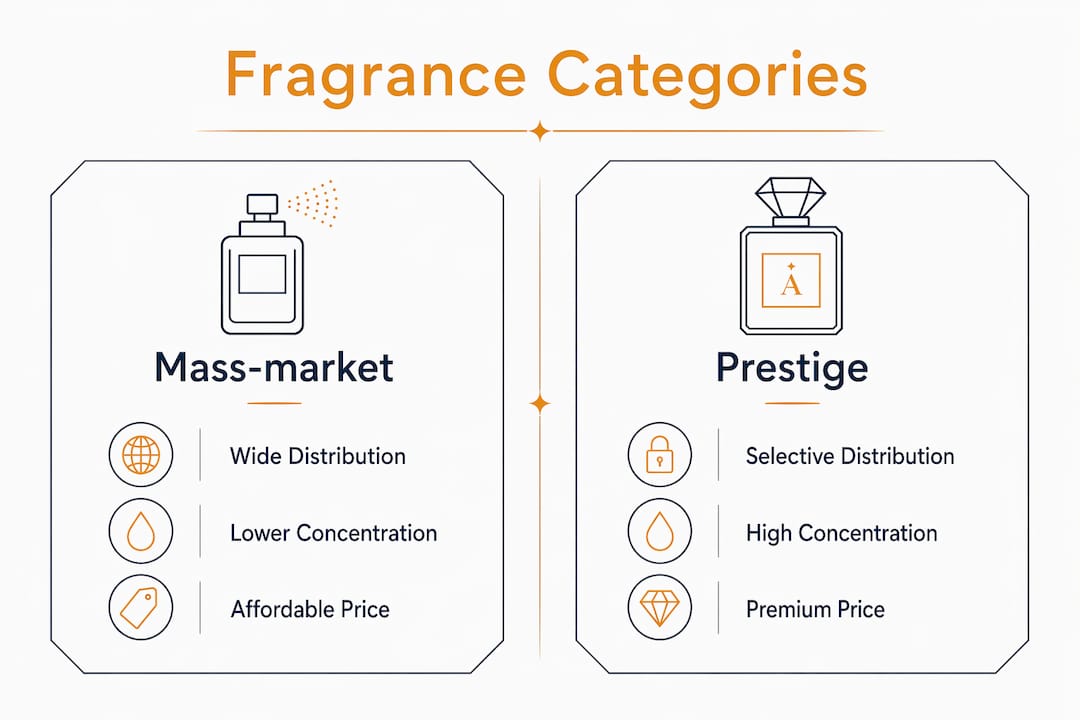
Mass-market fragrances are formulated for broad appeal and wide retail distribution. They use lower fragrance concentrations and rely on high-volume sales rather than premium margins. You find them in supermarkets, pharmacies, and discount stores. The goal is accessibility, not exclusivity.
Prestige fragrances sit in the middle tier by distribution but at the top by price and brand investment. They are sold in department stores and authorized specialty retailers. The formulas are more complex, the packaging is more considered, and the marketing budget goes toward aspirational storytelling rather than promotional discounts.
Niche fragrances operate outside mainstream retail entirely. They are produced in smaller batches, often by independent perfumers, and sold through boutique channels or direct-to-consumer platforms. Niche houses prioritize creative freedom over commercial appeal. For a deeper look at what makes niche perfumery distinct, the guide to niche fragrance brands at Aromatick covers the key differences clearly.
The lines between prestige and niche are blurring. Prestige brands now adopt the storytelling and creative freedom that niche houses pioneered, merging premiumization trends with broader distribution reach. The result is a new middle ground where a prestige release can feel as artisanal as a niche bottle.
| Category | Distribution | Concentration | Price range | Storytelling focus |
|---|---|---|---|---|
| Mass-market | Supermarkets, pharmacies | Low (EDT 5–8%) | Under $40 | Minimal |
| Prestige | Department stores, specialty retail | Medium to high (EDP, parfum) | $80–$350+ | High |
| Niche | Boutiques, direct-to-consumer | High (parfum, extrait) | $150–$600+ | Very high |
How are market trends reshaping the prestige fragrance segment?
Consumer preferences are pulling the prestige fragrance segment toward higher concentrations, gender-fluid formats, and experience-driven purchasing. The data backs this up clearly.
- Parfum formats are surging. Parfums grew 43% and eau de parfums grew 14% year over year in 2025. Shoppers are willing to pay more for a scent that lasts longer and projects further.
- Men’s fragrances dominate unit sales. Men’s eau de parfum and eau de toilette represent approximately 55% of total prestige fragrance units sold. This demographic shift is pushing brands to invest more in masculine and unisex prestige offerings.
- Value layering is growing alongside prestige. Body sprays grew 94% and hair fragrances grew 32%, showing that consumers want to build full scent wardrobes rather than rely on a single bottle.
- Premiumization is leading product development. Creative storytelling now takes precedence over consumer testing in prestige fragrance development. Brands launch based on a creative vision and trust the story to sell the scent.
- Experience defines value. Consumers are redefining value around elevated experiences and genuine innovation, not just brand logos. Prestige brands that rely solely on heritage without product evolution are losing ground.
The rise of gender-fluid and unisex fragrances is particularly significant. Prestige houses are releasing collections that reject traditional masculine or feminine labeling, appealing to a younger generation that shops by scent profile rather than gender category. This shift is expanding the prestige audience without diluting the exclusivity that defines the category.
Which brands and perfume types fall under the prestige fragrance category?
Prestige fragrance brands are typically heritage luxury houses with decades of perfumery history, or newer brands that have built strong reputations through quality and creative positioning. The category includes both fashion-led fragrance lines and dedicated perfume houses.
Common characteristics of prestige fragrance brands include:
- Long-standing heritage. Houses like Chanel, Dior, Guerlain, and Yves Saint Laurent have built prestige fragrance reputations over generations. Their longevity is itself a signal of quality and consumer trust.
- High-concentration formats. Prestige releases favor eau de parfum, parfum, and extrait de parfum formats. These deliver stronger projection and longer wear, justifying higher price points. For a full breakdown of concentration levels, Aromatick’s perfume concentration guide explains each format in plain terms.
- Limited editions and novelty collections. Prestige houses regularly release special editions, collector bottles, and seasonal flankers. These create urgency and reinforce the exclusivity narrative.
- Geographical prestige signals. French and Italian origin still carries significant weight in consumer perception. “Made in France” on a prestige bottle communicates a specific standard of craftsmanship, even when the formula is created by an international team.
The term “haute perfumery” appears frequently in prestige marketing. Haute perfumery is a marketing label applied to fragrances priced above €200 to evoke exclusivity. Unlike haute couture, it carries no legal protection or regulated compositional standard. Shoppers should treat it as a pricing signal, not a quality guarantee.
How do you choose and appreciate prestige fragrances?
Choosing a prestige fragrance well requires understanding concentration, occasion, and your own skin chemistry. A $300 parfum that clashes with your skin’s natural pH will disappoint every time, while a well-matched eau de parfum at half the price can feel perfect.
- Match concentration to occasion. Parfum and extrait formats suit evening wear and special occasions. Eau de parfum works for daily wear with strong projection. Eau de toilette is lighter and better suited to warm weather or office environments.
- Test on skin, not paper. Fragrance strips show you the top notes. Your skin reveals the full dry-down, including the base notes that define how a scent wears over hours.
- Evaluate the bottle and packaging. In the prestige category, packaging is part of the product. Heavy glass, precise atomizers, and considered design are quality signals. A flimsy cap or uneven spray mechanism on a “prestige” bottle is a red flag for authenticity.
- Buy from authorized sources. Counterfeits in the prestige fragrance market are common. Authorized retailers, brand boutiques, and trusted platforms with authenticity guarantees are the only safe options. Aromatick’s tips on authentic discounts walk through exactly what to check before purchasing.
- Consider scent layering. Prestige houses often design complementary body lotions, shower gels, and hair mists to extend a fragrance’s presence. Layering these products creates a fuller, longer-lasting scent experience.
Pro Tip: Apply prestige fragrances to pulse points immediately after showering, when skin is slightly damp. The moisture locks in the scent and extends the dry-down significantly.
Key Takeaways
The prestige fragrance category is defined by premium ingredients, selective distribution, high fragrance concentrations, and brand heritage that together justify premium pricing and drive strong consumer loyalty.
| Point | Details |
|---|---|
| Prestige fragrance definition | Luxury perfumes sold through selective channels, built on heritage, and formulated with premium ingredients. |
| Concentration drives value | Parfum and eau de parfum formats signal prestige quality and deliver longer wear than mass-market alternatives. |
| Market growth is real | Fragrance holds 28% of U.S. prestige beauty sales and grew 12% in 2024, with parfums up 43% in 2025. |
| Niche and prestige are converging | Prestige brands now adopt niche storytelling and creative freedom, blurring traditional category boundaries. |
| Authenticity matters | Buying from authorized retailers protects against counterfeits and ensures you receive the formula you paid for. |
The prestige fragrance category is changing faster than most people realize
I have spent years watching the fragrance market, and the most interesting shift right now is not the price increases. It is the identity crisis at the top of the market.
Prestige brands built their reputations on consistency. You bought a classic because you knew exactly what you were getting. That reliability was the point. But younger consumers do not want reliability. They want discovery, creativity, and a scent that feels personal rather than institutional.
The response from prestige houses has been to launch niche-style collections under their main umbrella. Limited editions, perfumer collaborations, and “private reserve” lines now sit alongside the classic catalog. This is smart business, but it creates a real question: if a prestige brand starts behaving like a niche house, what exactly are you paying the prestige premium for?
My honest view is that the answer still comes down to raw material quality and the perfumer’s skill. A well-constructed eau de parfum from a serious prestige house uses ingredients that a mass-market brand simply cannot afford to include at scale. That gap is real, even when the marketing language on both sides sounds identical.
The practical advice I give to anyone building a fragrance collection is this: ignore the tier labels and focus on the formula. Read the notes, test on your skin, and pay attention to how the scent evolves over four to six hours. A prestige fragrance that performs well on your skin is worth every dollar. One that does not is just an expensive bottle.
— Rodney
Authentic prestige fragrances at Aromatick
Aromatick carries a curated selection of authentic designer and niche fragrances, including the high-concentration formats that define the prestige category. Every bottle is verified genuine, and prices run up to 60% below standard retail.
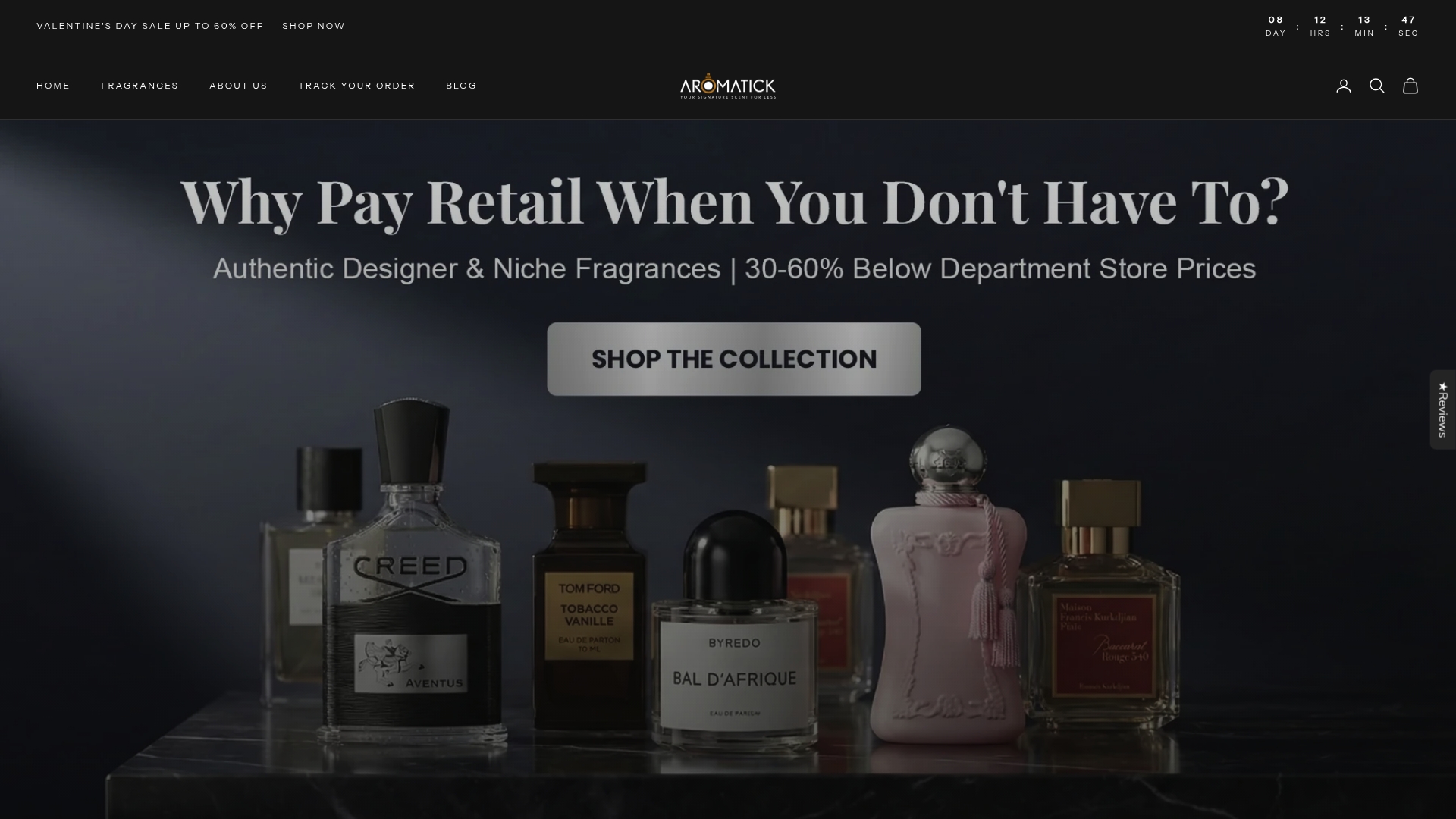
If you are ready to explore prestige scents without the department store markup, the designer fragrance collection at Aromatick covers a wide range of heritage houses and contemporary prestige releases. For shoppers drawn to the niche side of the market, the niche fragrance collection features authentic bottles from boutique houses at prices that make the category genuinely accessible. Free shipping, secure payments, and a satisfaction guarantee come standard on every order.
FAQ
What is the prestige fragrance category in simple terms?
The prestige fragrance category refers to luxury perfumes and colognes sold through selective retail channels, built on brand heritage, and formulated with premium ingredients. These products command higher prices than mass-market fragrances because of their quality, concentration, and emotional brand positioning.
What is the difference between luxury and prestige fragrances?
Prestige fragrance is the industry term for what consumers typically call luxury fragrance. Both phrases describe the same tier of high-quality, premium-priced perfumes sold through selective distribution, though “prestige” is the standard label used by market analysts and beauty retailers.
What are niche fragrances, and how do they compare to prestige?
Niche fragrances are produced in smaller batches by independent or boutique perfumers and sold through limited channels, prioritizing creative expression over mass appeal. Prestige fragrances come from heritage houses with broader distribution. The two categories are converging as prestige brands adopt niche-style storytelling and limited editions.
Why are parfum and eau de parfum formats growing so fast?
Parfums grew 43% and eau de parfums grew 14% year over year in 2025, driven by consumers who want longer-lasting scents and are willing to pay for higher fragrance oil concentrations. Higher concentration means fewer applications and stronger projection throughout the day.
How do I know if a prestige fragrance is authentic?
Purchase only from authorized retailers, brand boutiques, or verified platforms that offer authenticity guarantees. Check the packaging quality, atomizer precision, and batch codes against the brand’s official records. Aromatick lists authenticity verification as a core part of its sourcing process for every fragrance it sells.

Leave a comment
This site is protected by hCaptcha and the hCaptcha Privacy Policy and Terms of Service apply.