
Why Scent Profiles Differ: Skin Chemistry Explained
The same perfume smells different on different people because each person’s skin chemistry, microbiome, and surface temperature change how fragrance molecules evaporate, bind, and transform. This isn’t a flaw in the perfume. It’s biology at work, and once you understand the mechanisms, you can predict and reduce the variation.
The main factors that determine how a fragrance reads on your skin:
- Skin pH and sebum level — acidity and oil content alter how quickly molecules evaporate and how long base notes cling
- Skin microbiome — bacteria and fungi on your skin’s surface can chemically transform certain fragrance ingredients, especially in the underarm
- Body temperature and application site — warmer skin accelerates evaporation; pulse points amplify projection
- Product interactions — scented soaps, lotions, and deodorants create a background that blends with any perfume you apply
- Diet, hormones, and medication — these change sweat composition and sebum output, which shifts how a fragrance presents over time
The practical takeaway: a blotter strip at the counter tells you what a perfume contains. Your skin tells you what it actually smells like on you. The rest of this article explains why, and what you can do about it.
Key Takeaways
Skin chemistry, not the perfume formula itself, is the primary reason the same fragrance smells different on different people, and understanding your skin type is the most direct path to finding fragrances that perform as intended.
| Point | Details |
|---|---|
| Skin pH and sebum drive longevity | Oily skin binds base notes longer; dry skin releases them faster, shortening the dry-down. |
| Microbiome transforms ingredients | Axillary bacteria can chemically alter ester and aldehyde compounds, producing new volatile notes. |
| Temperature and humidity are immediate variables | Warm skin accelerates top-note evaporation; high humidity extends diffusion and projection. |
| Product interactions add background notes | Scented soaps, lotions, and deodorants blend with any fragrance applied over them. |
| Aromatick decants enable real-skin testing | Testing a fragrance across multiple days on your own skin is the only reliable way to predict performance. |
Table of Contents
- How perfume formulas behave differently on skin than on paper
- Why your biology is the biggest factor in how scents vary
- How temperature, humidity, diet, and lifestyle shift what you smell
- How application technique and other products change a perfume’s behavior
- What happens to a fragrance over time on different skin types
- What peer-reviewed research actually shows about skin and fragrance chemistry
- How to test perfumes on your skin and get consistent results
- The part most fragrance advice gets wrong
- Authentic fragrances worth testing on your skin
- Useful sources and further reading
How perfume formulas behave differently on skin than on paper
A fragrance is built in three layers, commonly called top, heart, and base notes, each defined by how quickly its molecules evaporate. Top notes, typically citrus compounds, light aldehydes, and terpenes, are the most volatile. They hit first and fade within a short time frame. Heart notes, often florals and spices, are mid-weight and carry the character of the fragrance for one to three hours. Base notes, including musks, woods, and resins, are the heaviest and slowest to evaporate, forming the dry-down that lingers for hours.
On an inert blotter, evaporation follows that sequence fairly cleanly. Skin is a different surface entirely. It has warmth, oil, moisture, and a living microbial community, all of which interfere with that sequence. Sebum can bind hydrophobic base-note molecules and slow their release. Heat accelerates top-note evaporation, sometimes so fast that you barely register them. The microbiome can chemically alter certain ingredients before they even reach the air above your skin.
| Molecular class | Typical note tier | Sensitivity to skin factors |
|---|---|---|
| Terpenes (limonene, linalool) | Top | High — evaporate quickly; accelerated by heat and dry skin |
| Esters (ethyl acetate, benzyl acetate) | Top / Heart | High — hydrolyzed by microbial esterases in moist areas |
| Aldehydes | Top / Heart | Moderate — affected by pH and oxidation on skin surface |
| Aromatic musks (Galaxolide, Iso E Super) | Heart / Base | Moderate — absorbed into sebum; longevity varies with oil level |
| Polycyclic musks, resins, woods | Base | Lower — most stable, but binding to sebum changes release rate |
What a blotter test reveals: the perfume’s intended accord, its top-note character, and rough balance of the formula. What it doesn’t reveal: how long it will last on your skin, whether the base notes will read as warm or flat, or whether your microbiome will alter any of the heart-note esters.
Why your biology is the biggest factor in how scents vary
Skin pH and sebum
Healthy skin pH typically sits between 4.5 and 5.5, a mildly acidic range maintained partly by Cutibacterium acnes, which secretes propionic acid as a metabolic byproduct. That acidity matters for fragrance chemistry because many ester and aldehyde compounds are sensitive to pH. A more acidic surface can accelerate hydrolysis of certain esters, shifting the balance of what you actually smell.
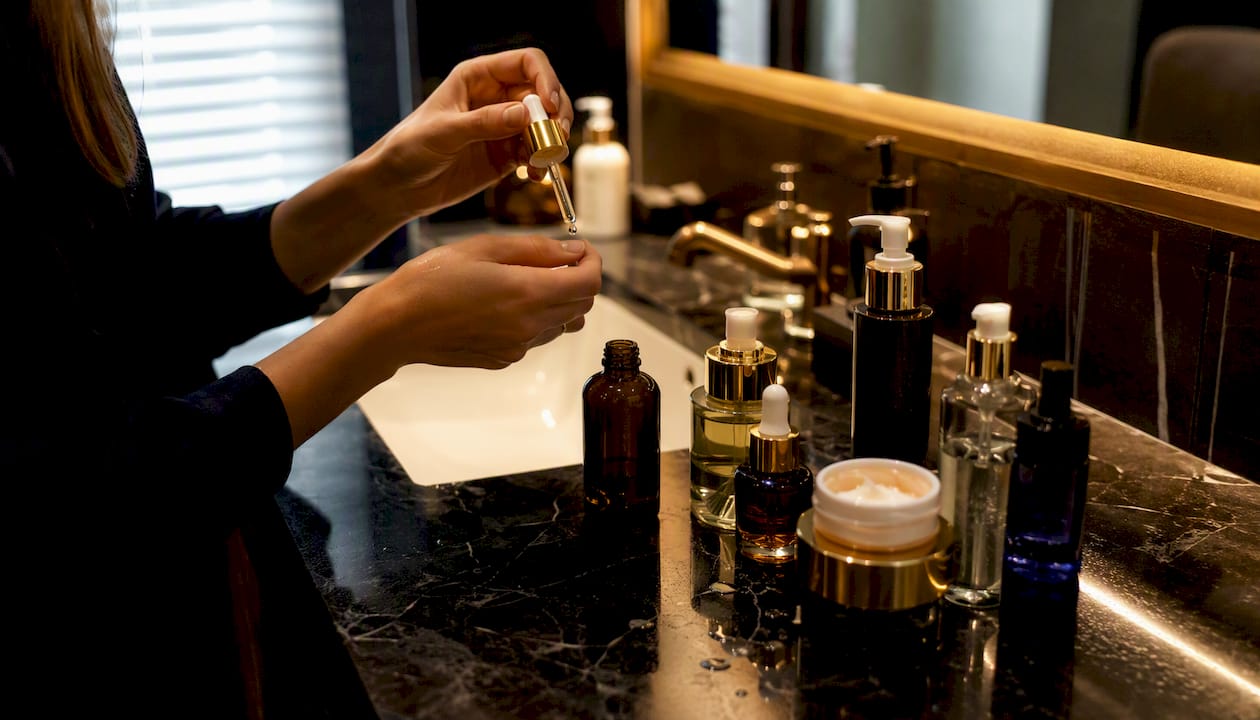
Sebum adds another layer of complexity. Oily skin tends to bind hydrophobic base notes more effectively, which increases longevity and keeps the dry-down rich and warm. Dry skin releases those same molecules faster, so the fragrance can fade more quickly and the top notes read sharper before the base settles in. This is why the same woody oriental can smell lush and long-lasting on one person and thin and fleeting on another.
The skin microbiome
The microbial community living on your skin is not uniform. Different body sites host distinct bacterial populations: sebaceous areas like the face and chest favor Cutibacterium and Malassezia, moist areas like the underarm host Corynebacterium and Staphylococcus, and dry areas like the forearm carry a more mixed community. These microbes produce enzymes, including lipases, esterases, and dehydrogenases, that can transform certain fragrance molecules, particularly in warm, moist microenvironments like the axilla.
Key research finding: Headspace analysis and solvent swabbing studies confirm that microbially catalyzed reactions in the underarm can alter perfume ingredients, producing volatile compounds that were not present in the original formula.
This is why a fragrance applied to the neck can smell noticeably different from the same fragrance applied to the wrist or the underarm. The microbial population, and therefore the chemical transformation potential, differs at each site.
Hormones and genetics
Sex hormones influence both sebum production and microbiome composition. Higher androgen levels generally increase sebaceous output, which shifts the skin surface toward a more oil-rich environment. Hormonal fluctuations across a menstrual cycle, pregnancy, or menopause can change how a fragrance reads week to week on the same person. Genetic factors also play a role: variations in skin lipid composition and immune-mediated microbiome selection mean that two people with similar diets and routines can still have meaningfully different skin surfaces.
Pro Tip: Track a single fragrance on your skin at the same time of day for seven consecutive days, noting how the dry-down reads each time. If you notice a consistent shift mid-cycle, you’re likely seeing hormonal effects on sebum and microbiome composition rather than variation in the perfume itself.
How temperature, humidity, diet, and lifestyle shift what you smell
Ambient temperature and your personal body temperature are among the most immediate variables. Warmer skin accelerates the evaporation of volatile top notes, which can make a fragrance open with more intensity but fade faster. In cold weather, projection drops noticeably because fewer molecules reach the air above the skin. This is why a light citrus fragrance that feels perfect in summer can seem almost absent in January.
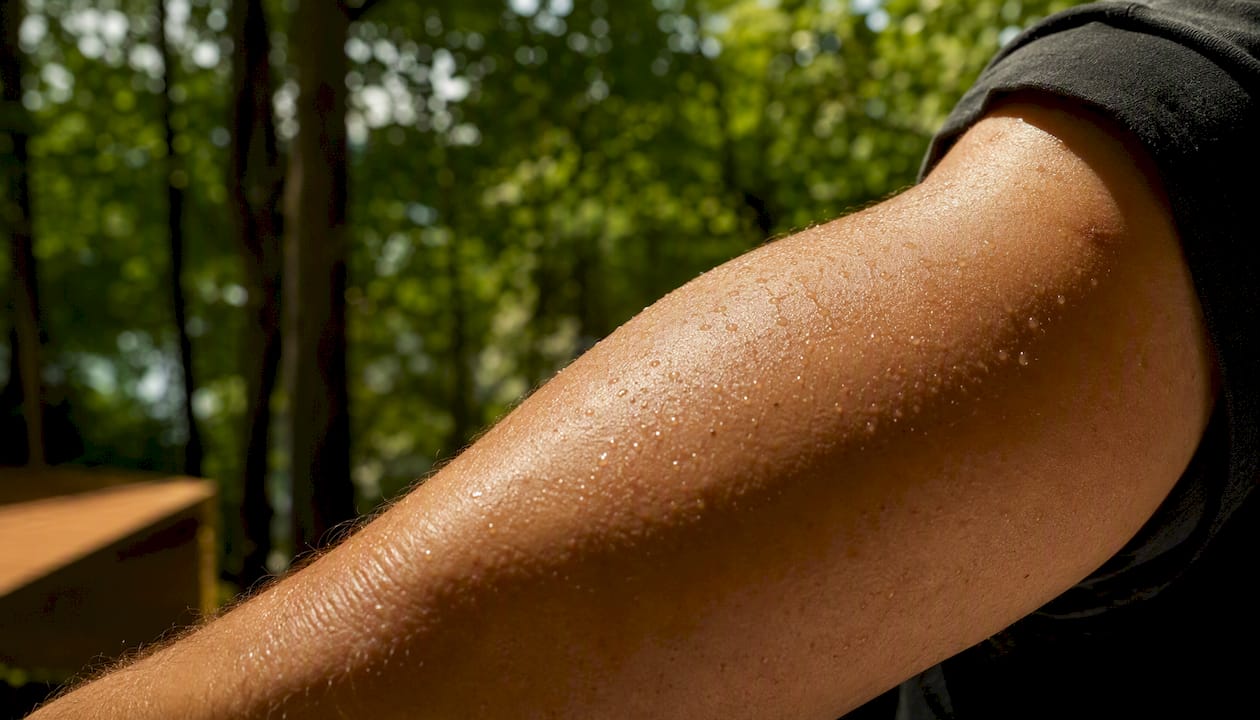
Humidity works differently. High humidity slows evaporation slightly and can actually extend the perceived life of a fragrance by keeping the skin surface moist. It also amplifies diffusion, which is why fragrances often smell stronger in a humid bathroom than in dry air.
Diet has a subtler but real effect. Dietary habits can change sweat composition, and those changes interact with how citrus and lighter fragrance families present on skin. Foods high in sulfur compounds (garlic, onion, cruciferous vegetables) can alter body odor precursors in sweat, creating a background note that blends with any fragrance you apply. Alcohol temporarily increases skin temperature and can accelerate top-note evaporation for an hour or two after consumption.
Medications deserve attention. Certain antibiotics, antifungals, and hormone therapies can shift microbiome composition or alter sebum output, changing how a fragrance behaves over weeks or months. Smoking changes skin surface chemistry and can dull the perception of lighter top notes.
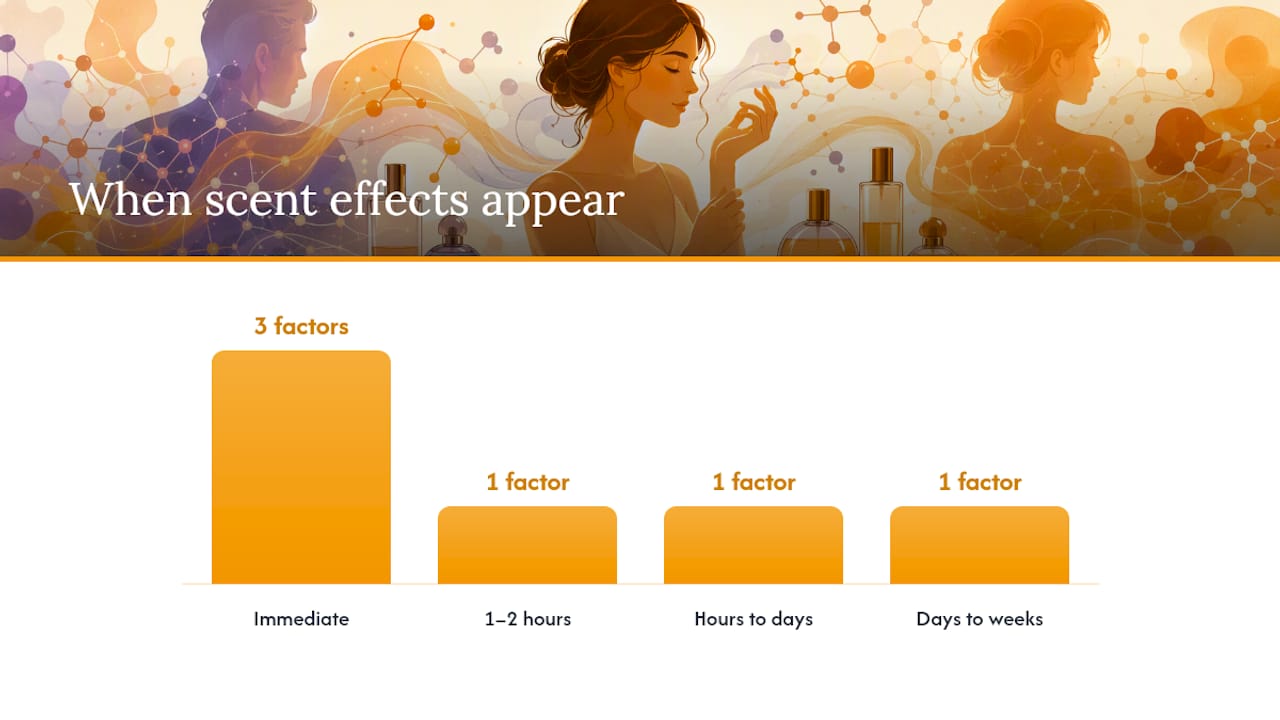
| Factor | Effect on scent | Timeline |
|---|---|---|
| High ambient temperature | Faster top-note evaporation, shorter longevity | Immediate |
| Exercise / elevated body temp | Amplified projection, faster fade | Immediate |
| High humidity | Extended diffusion, stronger throw | Immediate |
| Alcohol consumption | Temporary skin warming, faster opening | 1–2 hours |
| Diet change (sulfur-rich foods) | Altered sweat background notes | Hours to days |
| Antibiotic course | Microbiome shift, changed base-note character | Days to weeks |
Pro Tip: To isolate a diet effect, wear the same fragrance on the same pulse point at the same time of day for three days while eating normally, then repeat after three days of avoiding a specific food group (e.g., garlic and onion). The difference in dry-down character is often more noticeable than people expect.
How application technique and other products change a perfume’s behavior
What you put on your skin before a fragrance matters as much as the fragrance itself. Moisturizers and body oils create a film that slows evaporation, effectively extending longevity, particularly for dry skin types. An unscented body lotion applied five minutes before spraying can meaningfully change how long a fragrance lasts. Scented lotions, however, introduce their own accord, which blends with the perfume and can shift the perceived character of the heart notes.
Scented soaps, deodorants, and fabric softeners all contribute background notes. A strongly scented deodorant in the underarm creates a chemical environment that can interact with any fragrance applied nearby. Fabric scents on clothing hold differently from skin, and because fabric lacks the warmth and oil of skin, the fragrance tends to stay closer to its original formula without microbial transformation.
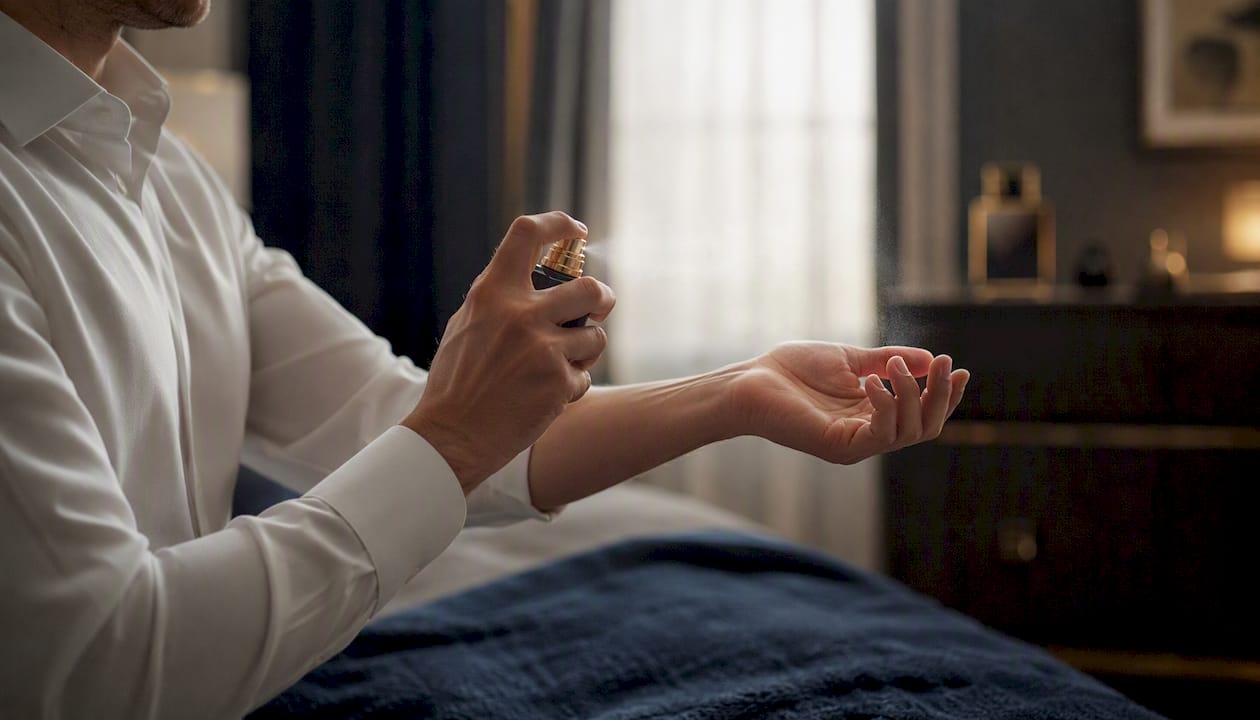
Spray placement changes the experience significantly. Pulse points (wrists, neck, inner elbow) are warmer and generate more projection. Clothing holds fragrance longer but without the biological transformation that makes skin wear unique. Spraying on hair can extend longevity but exposes the fragrance to different chemical conditions than skin.
Concentration also shapes the experience. An Eau de Parfum carries a higher percentage of fragrance oil than an Eau de Toilette, which means the heart and base notes are more prominent from the start. On dry skin, an EDP often performs better because there’s more material for the skin to work with. For a detailed breakdown of concentration differences, the perfume vs cologne guide covers this clearly.
How to test a perfume cleanly:
- Shower with an unscented soap the morning of your test.
- Skip all scented lotions, deodorants, and hair products.
- Apply the fragrance to one pulse point only (inner wrist is standard).
- Wait 30 minutes before evaluating the heart notes.
- Check again at 2 hours and 4 hours to assess dry-down and longevity.
- Note the temperature and humidity conditions so you can compare tests fairly.
Pro Tip: Order a decant before committing to a full bottle. A 5–10 ml sample worn across three different days, in different weather conditions, gives you a far more accurate picture of how a fragrance will perform on your skin than any in-store test.
For more on how layering products interact, the fragrance layering guide walks through the technique in detail.
What happens to a fragrance over time on different skin types
A typical fragrance timeline runs roughly like this: the first 30 minutes are dominated by top notes, the 30-minute to 3-hour window reveals the heart, and the 3-hour-plus phase is the dry-down where base notes dominate. But those windows shift considerably depending on skin type and body site.
| Skin / condition | Top-note phase | Heart phase | Base / dry-down |
|---|---|---|---|
| Oily skin, warm body temp | Short (about 10 min) | Extended, richer | Long, warm, anchored |
| Dry skin, cool body temp | Longer (about 30 min) | Thinner, faster fade | Shorter, lighter |
| Pulse point (neck, wrist) | Intense, fast | Strong projection | Moderate longevity |
| Clothing (fabric) | Slower release | Closer to formula | Very long, unchanged |
Projection, the distance at which others can detect your fragrance, peaks during the heart phase and is most influenced by body temperature and the volatility of the heart-note molecules. Sillage, the trail a fragrance leaves as you move, depends on the base-note composition and how well those molecules bind to your skin or clothing.
A quick checklist for evaluating longevity in a 4-hour test:
- At 30 minutes: Is the opening accord still present, or have top notes already faded?
- At 1 hour: What is the dominant character? Does it match the fragrance’s described heart notes?
- At 2 hours: Is projection still noticeable at arm’s length?
- At 4 hours: Is there a detectable dry-down, or has the fragrance disappeared entirely?
For a deeper look at longevity metrics and what they mean for choosing a fragrance, the perfume longevity guide is worth reading alongside this article.
What peer-reviewed research actually shows about skin and fragrance chemistry
The science here is more nuanced than most fragrance content acknowledges. Physical interactions between perfume and skin, driven by sebum absorption, surface temperature, and hydration, are well-documented and account for the majority of variation most people experience. Chemical transformations of fragrance ingredients on clean, dry skin are limited under normal conditions. The exception is the axillary region, where the warm, moist, microbe-rich environment creates conditions for genuine biochemical change.
Research note: Headspace analysis, a technique that captures volatile molecules above the skin surface without contact, has been used to confirm that microbial activity in the underarm can produce new volatile compounds not present in the original formula. This is the strongest direct evidence for microbiome-driven scent variation.
The skin microbiome research identifies microbial enzymes, specifically lipases, esterases, and dehydrogenases, as the most likely biochemical agents altering fragrance compounds in sebaceous and moist areas. Claims about microbiome-driven transformation on dry forearm skin are plausible but less well-supported by current evidence. The axilla is where the effect is clearest.
IFRA (the International Fragrance Association) sets formulation standards that constrain which ingredients can be used and at what concentrations. Those standards influence which molecular classes appear in modern fragrances, which in turn affects how sensitive a given formula is to skin chemistry. A formula heavy in esters and light aldehydes will be more susceptible to microbial transformation than one built around polycyclic musks and resins.
The emerging direction in fragrance science is personalization based on microbiome profiling, where a formula could be adjusted to account for an individual’s dominant skin bacteria. That remains a research-stage concept, but it reflects how seriously the industry now takes skin biology as a variable in fragrance performance.
How to test perfumes on your skin and get consistent results
The goal is to reduce variables so that what you’re evaluating is the fragrance’s behavior on your skin, not the noise introduced by other products or conditions.
- Start with clean, unscented skin. Shower with an unscented soap (Dove Sensitive Skin or Vanicream are widely available) and skip all scented products.
- Apply to one pulse point. The inner wrist is standard. Avoid rubbing, which breaks down top-note molecules faster.
- Wait before judging. Give the fragrance at least 30 minutes before forming an opinion. The opening accord is not the full picture.
- Check at structured intervals. Evaluate at 30 minutes, 2 hours, and 4 hours. Note what’s dominant at each checkpoint.
- Test on multiple days. Skin conditions vary. A fragrance that reads flat on a dry winter day may open beautifully in summer humidity.
- Use a decant for extended testing. A small sample worn across several days in different conditions is the only reliable way to know how a fragrance will perform for you long-term.
- If longevity is the issue, try moisturizing first. Applying an unscented lotion to the pulse point five minutes before spraying can extend the dry-down noticeably, especially on dry skin.
When to choose a different concentration or fragrance family: if your skin consistently accelerates top-note evaporation and flattens the heart, consider an EDP over an EDT, or shift toward fragrance families built on heavier base materials (orientals, woods, ambers) rather than light citrus or aquatic accords. For guidance on choosing a signature scent that accounts for your skin type, Aromatick’s guide covers the selection process in practical terms.
Pro Tip: Discovery sets and decants are the most cost-effective testing tool available. Wearing a fragrance across three different days, in different temperatures and after different meals, tells you more than any in-store test strip ever could.
Pre-test checklist:
- Unscented soap used that morning
- No scented lotion, deodorant, or hair product applied
- Single pulse point, no rubbing
- Test conditions noted (temperature, humidity, time of day)
- Evaluation scheduled at 30 min, 2 hr, 4 hr
The part most fragrance advice gets wrong
Most fragrance content stops at “your skin chemistry is unique” and leaves it there, as if that’s a satisfying explanation. It isn’t. The more useful framing is that your skin is an active participant in the fragrance, not just a passive surface it sits on.
The practical implication that gets overlooked: the fragrance you’re evaluating in a store, on a cold blotter, after a single spray, in climate-controlled air, is not the fragrance you’ll be wearing. It’s a controlled approximation. The real test is three wears across different days, different temperatures, and different points in your week. That’s when you learn whether the heart notes hold, whether the dry-down reads warm or flat on your skin, and whether the projection suits the situations you actually wear fragrance in.
The other thing worth saying plainly: most people who think a fragrance “doesn’t work on them” have never tested it properly. They’ve tested it once, under conditions that don’t reflect their normal skin state. A clean-skin test, with an unscented base and structured time checkpoints, often reveals a fragrance performing exactly as intended. The problem isn’t the perfume. The problem is the testing method.
Decants exist precisely to solve this. A 5 ml sample worn three times costs a fraction of a full bottle and gives you real data about how a fragrance behaves on your skin across conditions. That’s not a workaround. That’s the right way to buy fragrance.
Authentic fragrances worth testing on your skin
The science in this article points to one clear conclusion: you need to test a fragrance on your own skin, across multiple days, before committing to a bottle. Aromatick makes that straightforward. The designer fragrance collection offers authentic designer and niche perfumes at 30–60% off retail, with a 100% authenticity guarantee that removes the guesswork about what you’re actually testing.

Whether you’re narrowing down a signature scent or exploring a new fragrance family that suits your skin type, Aromatick’s range covers everything from accessible designer names to niche houses. Free shipping is available over the threshold, and every order is backed by a satisfaction guarantee. Browse the collection, pick a fragrance that fits the profile your skin favors, and test it the right way.
Useful sources and further reading
The following sources informed this article and are worth consulting directly for deeper reading:
- Overall consumer perception of personal products … (Wiley / PubMed summary)
- The Future of Fragrance Personalization: Harnessing Skin Microbiome Insights for Enhanced Performance, Safety, and Sustainability[v1] | Preprints.org
- How skin changes perfume: physical and chemical interactions (Wiley Online Library)
- Why Perfume Smells Different on Your Skin: Skin Chemistry
- Why Your Diet Changes How Perfume Smells – The Nation Times
- ifrafragrance.org

Leave a comment
This site is protected by hCaptcha and the hCaptcha Privacy Policy and Terms of Service apply.